Embodied carbon,
quantified to EN 15978.
As operational energy improves, embodied carbon becomes the larger share of a building's lifetime impact.
Life Cycle Assessment quantifies the environmental impact of materials, products and whole buildings across every stage, from extraction, manufacture, transport, construction and use through to replacement and end of life, in accordance with ISO 14040/14044 and EN 15978.
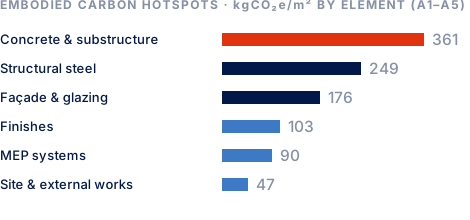
We use it to identify where impact actually concentrates, then test alternative specifications against it. In most buildings a small number of elements carry the majority of embodied carbon, and they are decided early.
- Whole Building Life Cycle Assessment
- Embodied carbon analysis
- Material impact comparison
- Environmental Product Declaration review
- Building material optimization
- Carbon hotspot identification
- Alternative scenario assessment
- Life-cycle impact evaluation
An EPD is a verified, standardized statement of a product's environmental impact. We review supplier EPDs for scope, validity and comparability before they are used in an assessment. Declarations are frequently not directly comparable, and substitutions made on the headline figure alone can increase impact.
Operational carbon can be improved later. Embodied carbon is emitted before handover and cannot be recovered.
As grids decarbonize and buildings become more efficient, materials account for a larger proportion of lifetime impact.
LEED, BREEAM and regional systems award credits for whole-building LCA and material transparency.
Embodied carbon is increasingly reported in Scope 3 inventories and requested in investor due diligence.